

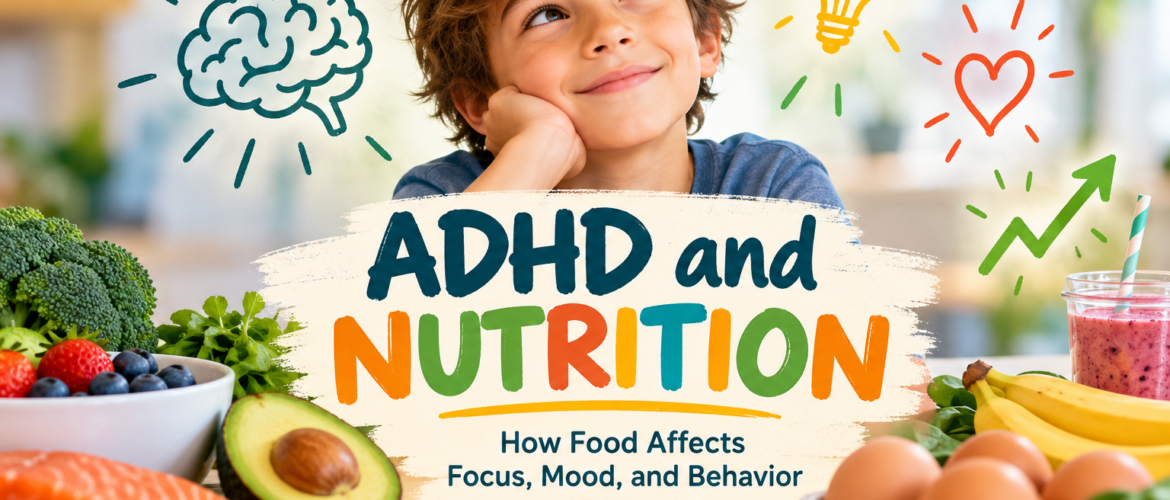
Could your child’s diet be making ADHD symptoms harder to manage? Learn how sugar, processed foods, protein, healthy fats, and eating habits can influence concentration, impulsivity, energy, and emotional regulation.
When parents think about ADHD (Attention-Deficit/Hyperactivity Disorder), they usually think about difficulty concentrating, hyperactivity, impulsivity, forgetfulness, or trouble following directions.
But what about the emotional outbursts? The constant snacking? The sugar cravings? The lack of motivation? Or the afternoon meltdown that seems to come out of nowhere?
These behaviors can have several contributing factors, but there’s one that deserves much more attention: nutrition.
What we eat affects far more than our waistlines. It influences our energy, hunger, brain development, neurotransmitter production, and overall ability to function throughout the day.
And when someone already struggles with attention, impulse control, and emotional regulation, poor eating habits can make an already challenging situation even harder.
Here’s the important distinction: You can’t simply eat your ADHD away. But you can make choices that help your brain and body function better, potentially making everyday challenges easier to manage.
Let’s look at how food can affect ADHD-related behavior and what parents and kids can do about it.
1. Sugar and ADHD: Understanding Energy, Hunger, and Mood
We’ve all seen it. A child grabs a donut, a sugary cereal, or a sweet drink for breakfast, and a short time later they’re hungry again, irritable, or having difficulty concentrating.
What’s going on?
When we consume refined carbohydrates and added sugars, our digestive system breaks them down into glucose, which enters the bloodstream.
The pancreas responds by releasing insulin, helping move glucose into our cells for energy.
Meals consisting primarily of rapidly digested carbohydrates can produce a relatively quick rise in blood glucose, followed by a decline as the body processes that energy.
That doesn’t mean every sugary meal causes a dramatic blood sugar crash. But sugary foods that lack protein, fat, and fiber may not keep a child satisfied for very long.
And hunger, fatigue, and inconsistent energy can affect patience, concentration, and mood.
Why This Matters for Children With ADHD
Imagine already having difficulty controlling your impulses or managing frustration.
Now add hunger, fatigue, and an unsatisfying diet to the equation.
You’re creating additional obstacles for a brain that’s already working hard to regulate attention and behavior.
For kids: Think of your brain like a high-performance car. You wouldn’t expect it to run its best on poor-quality fuel. Your brain needs a variety of nutrients to keep functioning throughout the day.
There’s nothing wrong with enjoying something sweet occasionally. The problem comes when sugary foods regularly replace nutritious meals.
2. Processed Foods, Dopamine, and the ADHD Reward System
One of the more interesting connections between food and ADHD involves the brain’s reward system.
ADHD is associated with differences in brain networks involved in attention, motivation, impulse control, and reward processing.
A neurotransmitter called dopamine plays an important role in these functions.
Dopamine helps us respond to rewards, learn from experiences, and become motivated to take action.
Now consider many ultra-processed foods.
Chips, candy, snack cakes, sugary cereals, and similar products are often engineered to be extremely palatable. Their combinations of sweetness, saltiness, fat, texture, and flavor make them especially appealing.
For someone who struggles with impulsivity or frequently seeks stimulation, these foods can become an easy source of immediate enjoyment.
Why Do Some Kids Constantly Look for Snacks?
Have you ever noticed a child wandering into the kitchen repeatedly, opening the pantry, and searching for something to eat?
Sometimes they’re genuinely hungry.
Other times they’re bored, stressed, distracted, or simply looking for something enjoyable.
Food can become part of a habitual reward-seeking routine, particularly when highly palatable snacks are constantly available.
There’s another issue: nutritional displacement.
When kids fill up on processed snacks, they may eat fewer nutrient-dense foods containing the protein, essential fats, vitamins, minerals, and fiber their bodies need.
The result is a diet that may provide plenty of calories without consistently providing balanced nutrition.
For kids: Just because your brain wants something doesn’t always mean your body needs it. Learning the difference between hunger, boredom, and cravings is an important skill.
3. Protein and ADHD: Fueling the Brain’s Chemical Messengers
Most people associate protein with building muscle.
But protein is just as important for normal brain function.
When we eat protein, our digestive system breaks it down into amino acids.
These amino acids serve as building blocks for tissues, enzymes, and important chemical messengers.
Two amino acids are particularly interesting when discussing brain function:
- Tyrosine: Used to produce dopamine and norepinephrine, neurotransmitters involved in attention, alertness, and motivation.
- Tryptophan: Used to produce serotonin, which participates in mood regulation and other neurological processes.
This doesn’t mean eating more protein automatically produces more dopamine. The brain regulates neurotransmitter production through complex biological processes.
But getting adequate protein is essential for normal growth, development, and neurological function.
Protein also helps make meals more satisfying, which can be particularly useful for children who become hungry shortly after eating.
Why Breakfast Is a Great Place to Start
Let’s compare two breakfasts.
Breakfast A: Sugary cereal and a glass of juice.
Breakfast B: Eggs, avocado, and fresh berries.
Breakfast B provides protein, healthy fats, fiber, and a broader variety of nutrients.
It’s a more balanced way to start the morning and may help keep a child satisfied until their next meal.
Some nutritious breakfast ideas include:
- Pasture-raised eggs with avocado and fruit
- Plain Greek yogurt with berries and walnuts
- A vegetable omelet with a side of fruit
- Leftover chicken or turkey with roasted sweet potatoes
- A smoothie made with Greek yogurt, berries, nut butter, and chia seeds
For kids: Your muscles aren’t the only part of your body that needs protein. Your brain relies on nutrients from protein-rich foods, too. Start your morning with something that actually nourishes you.
4. Healthy Fats and ADHD: Your Brain Needs Fat to Function
For decades, people were encouraged to avoid dietary fat.
But fat is an essential component of a healthy diet, especially when it comes to brain development.
Fats help form cell membranes, support hormone production, and allow the body to absorb vitamins A, D, E, and K.
They also provide important structural components for the nervous system.
Omega-3 Fatty Acids and Brain Health
Omega-3 fatty acids are especially important to discuss.
DHA is a major structural component of neuronal membranes, while EPA participates in processes related to cell signaling and inflammation.
Researchers have also investigated differences in omega-3 status among individuals with ADHD.
Regardless of whether someone has ADHD, adequate omega-3 intake is an important part of supporting overall health.
Good sources include:
- Wild-caught salmon
- Sardines
- Trout
- Walnuts
- Chia seeds
- Ground flaxseeds
Fatty fish supplies EPA and DHA directly, while plant foods provide ALA, another omega-3 fatty acid.
Other nutritious fats include avocados, extra-virgin olive oil, nuts, seeds, and eggs.
For kids: Your brain needs healthy fats as part of its normal structure and function. Eating nutritious fats isn’t something to be afraid of. It’s part of giving your body what it needs to grow.
For more about dietary fat, food quality, and cholesterol, explore our Mind Body Fit article on cholesterol and heart health.
5. Skipping Meals and ADHD: When Hunger Makes Behavior Worse
This may be one of the most overlooked pieces of the ADHD and nutrition puzzle.
Picture this:
Your child rushes out the door without breakfast.
They eat very little at lunch.
By the time they get home from school, they’re exhausted, starving, and impatient.
Suddenly, every little thing becomes an argument.
They get frustrated easily. They can’t concentrate on homework. They become upset when asked to do something they don’t want to do.
And everyone assumes it’s just their ADHD acting up.
But what if hunger is contributing to the problem?
Hunger and Emotional Regulation
Hunger can affect mood, patience, and concentration in both children and adults.
When someone goes too long without eating, they may experience fatigue, irritability, headaches, or difficulty focusing.
For someone who already struggles with emotional regulation, these additional stressors can make everyday frustrations feel more overwhelming.
And that’s why meal consistency matters.
Children don’t need to eat constantly, but they do need enough food throughout the day to support their growth, activity, and energy needs.
A predictable routine might include:
- A balanced breakfast
- A nutritious lunch
- An after-school snack when needed
- A balanced dinner
For children taking ADHD medications that suppress appetite, meal timing can become especially important. Parents should work with their child’s prescribing clinician if appetite or growth becomes a concern.
For parents: Before interpreting every emotional outburst as a behavioral problem, consider whether your child is hungry, overtired, overstimulated, or physically uncomfortable.
For kids: Ever notice how everything seems more annoying when you’re really hungry? That’s a good reminder that taking care of your body can help you handle difficult moments.
6. Important Nutrients for ADHD and Brain Function
Protein and healthy fats aren’t the only nutrients involved in neurological health.
Several vitamins and minerals participate in normal brain development, nerve signaling, and energy metabolism.
Iron
Iron is important for oxygen transport and enzymes involved in neurotransmitter synthesis.
Good sources include beef, poultry, seafood, beans, and lentils.
Zinc
Zinc contributes to neurological development, normal cellular signaling, and numerous enzymatic reactions.
Sources include beef, shellfish, pumpkin seeds, and legumes.
Magnesium
Magnesium is involved in nerve function, muscle function, and hundreds of biochemical reactions.
Sources include pumpkin seeds, almonds, leafy greens, and beans.
Vitamin D
Vitamin D supports numerous physiological functions and plays a role in overall health.
Sources include fatty fish, egg yolks, fortified foods, and vitamin D produced through appropriate sun exposure.
The point isn’t to start giving children handfuls of supplements.
It’s to recognize that the brain requires a wide variety of nutrients, and a diet dominated by highly processed snack foods may not provide them consistently.
Suspected nutritional deficiencies should be evaluated by an appropriate healthcare professional before supplementing.
7. Artificial Food Dyes and ADHD Behavior
Artificial food colorings are another area worth paying attention to.
Research has identified that certain synthetic food colorings, sometimes in combination with preservatives, can influence hyperactivity-related behaviors in some children.
Individual responses vary, but this is one reason parents may choose to reduce products containing unnecessary artificial colors.
You’ll often find these additives in brightly colored candy, drinks, cereals, and packaged snacks.
However, don’t fall into the trap of assuming a product is nutritious simply because it’s labeled “naturally colored.”
Food quality involves the entire nutritional picture, not just one ingredient.
If you suspect certain foods or additives affect your child’s behavior, consider keeping a simple food, sleep, and behavior journal to identify patterns.
8. ADHD, Video Games, and Constant Snacking: A Powerful Combination
Here’s something many parents will recognize.
A child gets home from school, grabs a bag of chips, sits down with a video game, and suddenly three hours have disappeared.
They’ve barely moved, haven’t eaten a proper meal, and become extremely frustrated when it’s time to stop playing.
Why can this combination be so difficult?
Video games provide frequent rewards, rapid feedback, novelty, and stimulation.
These characteristics can be particularly engaging for children with ADHD.
Highly palatable snack foods also provide immediate enjoyment.
When the two activities become linked, eating may become automatic rather than a response to genuine hunger.
Meanwhile, screen time can distract children from recognizing hunger and fullness, interrupt meal routines, and displace physical activity.
Combine that with poor sleep or skipped meals, and you’ve created several additional challenges for emotional regulation.
For Kids: Try This Simple Experiment
The next time you’re gaming and feel like grabbing a snack, ask yourself three questions:
- Am I actually hungry?
- Am I bored or looking for something exciting?
- Would I still want this food if I weren’t playing a game?
There’s nothing wrong with enjoying a snack while watching something or playing a game occasionally.
But learning to recognize your body’s signals is an important part of becoming more independent and making healthier decisions.
Try eating your main meals away from screens and taking movement breaks throughout the day.
9. How to Improve ADHD-Related Eating Habits: Seven Practical Steps
Improving your child’s nutrition doesn’t require a complicated diet or eliminating everything they enjoy.
Start with a few simple changes.
1. Prioritize Protein at Breakfast
Build breakfast around eggs, Greek yogurt, or another quality protein source rather than relying primarily on sugary cereal or pastries.
2. Include Healthy Fats Every Day
Use foods such as avocado, olive oil, nuts, seeds, and fatty fish to provide essential nutrients.
3. Avoid Regularly Skipping Meals
Create predictable meal routines and offer nutritious snacks when needed to prevent excessive hunger.
4. Reduce Reliance on Ultra-Processed Snacks
Make whole and minimally processed foods the foundation of your family’s diet.
5. Combine Protein, Fat, and Fiber
Instead of offering fruit juice and crackers alone, try an apple with nut butter, berries with Greek yogurt, or vegetables with hummus.
6. Pay Attention to Hydration
Encourage water throughout the day. Inadequate hydration can contribute to headaches, fatigue, and difficulty concentrating.
7. Track Patterns Without Turning Food Into a Battle
Pay attention to how your child feels after different meals, when they become hungry, and whether difficult afternoons coincide with missed meals or poor sleep.
Use those observations to build better routines, not to criticize your child for what they eat.
10. A Message to Kids and Teens With ADHD: Your Food Choices Matter
If you have ADHD, this section is especially for you.
Maybe it’s hard to focus on homework.
Maybe you get frustrated easily or sometimes say things before thinking.
Maybe you can spend hours playing a video game but struggle to concentrate on something you don’t enjoy.
Those challenges can be part of ADHD.
But here’s something important to understand:
Just because ADHD makes something difficult doesn’t mean your everyday choices can’t make a difference.
Think about an athlete.
Imagine a professional football player trying to perform at their best after skipping meals, sleeping poorly, and eating mostly candy and chips.
Even with incredible athletic ability, they’re making their job harder.
Your brain works the same way in one important respect: It needs proper nutrition, rest, and healthy routines to function well.
When you’re hungry, tired, or not eating balanced meals, focusing and managing frustration may become even more challenging.
But when you eat nutritious foods regularly, get enough sleep, drink water, and stay active, you’re giving yourself a better foundation for handling your day.
You don’t have to eat perfectly.
You don’t have to give up your favorite treats.
And you’re not expected to control every symptom of ADHD simply by changing what you eat.
But you can start making decisions that support your brain instead of making its job harder.
Here’s the challenge: For one week, start your day with a protein-rich breakfast, eat regular meals, drink water, and pay attention to how you feel.
Notice your hunger, energy, concentration, and mood.
See what you learn about your own body.
Because understanding how your body works is one of the most valuable skills you can develop.
Final Thoughts: Don’t Make an Already Challenging Brain Work Harder
ADHD can create real challenges with focus, impulsivity, motivation, and emotional regulation.
But those challenges don’t exist in isolation.
Nutrition, sleep, stress, physical activity, and daily routines all influence how we feel and function.
A child who regularly skips meals, relies heavily on processed snacks, gets inadequate protein, or doesn’t consume a variety of nutrient-dense foods may be adding unnecessary challenges to their day.
And when we improve those habits, we’re giving the brain and body a better foundation to work from.
Nutrition isn’t about fixing ADHD. It’s about helping children feel and function as well as possible while learning to manage it.
That’s an important distinction, and one worth teaching children early.
Mind Body Fit: Looking Beyond Exercise
At Mind Body Fit LLC, I believe health is about much more than exercise or the number on a scale.
My holistic approach looks at how nutrition, movement, sleep, stress, posture, and lifestyle habits influence the way our bodies function.
Whether we’re addressing physical discomfort, improving energy, building healthier routines, or supporting long-term wellness, the goal is to identify the factors that may be holding someone back.
Because sometimes the most meaningful improvements begin with changing the habits we repeat every day.
Mind Body Fit provides individualized holistic health and fitness coaching in Lakewood Ranch, Sarasota, Bradenton, Parrish, and virtually.
Ready to take a more personalized approach to your health?
Book a Free 30-Minute Consultation with Mind Body Fit and learn how we can work together to build healthier, more sustainable habits.
Scientific References and Additional Reading
- CDC: ADHD in Children — ADHD symptoms, management, and the importance of healthy lifestyle habits.
- CDC: Protecting the Health of Children With ADHD — Nutrition, sleep, movement, and healthy routines.
- NIH: ADHD and Complementary Health Approaches — Research involving nutrition and dietary interventions.
- Omega-3 Fatty Acids and ADHD: Blood Level Analysis and Meta-Analytic Extension of Supplementation Trials — Research on omega-3 status and ADHD.
- USDA: Protein Foods and Essential Nutrients — Dietary sources of protein, amino acids, vitamins, and minerals.
This article provides general educational information and is not intended to diagnose or treat ADHD. Nutritional and lifestyle strategies can support overall health alongside individualized medical and behavioral care. Consult a qualified healthcare professional about specific dietary concerns, suspected deficiencies, or medication-related appetite changes.